


Your shopping cart is empty!
Chili pepper "Grisu" F1
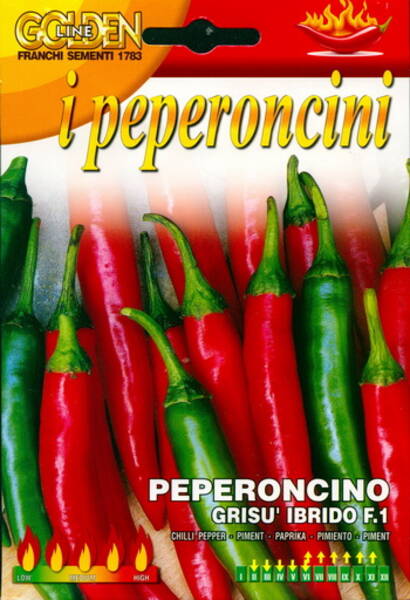
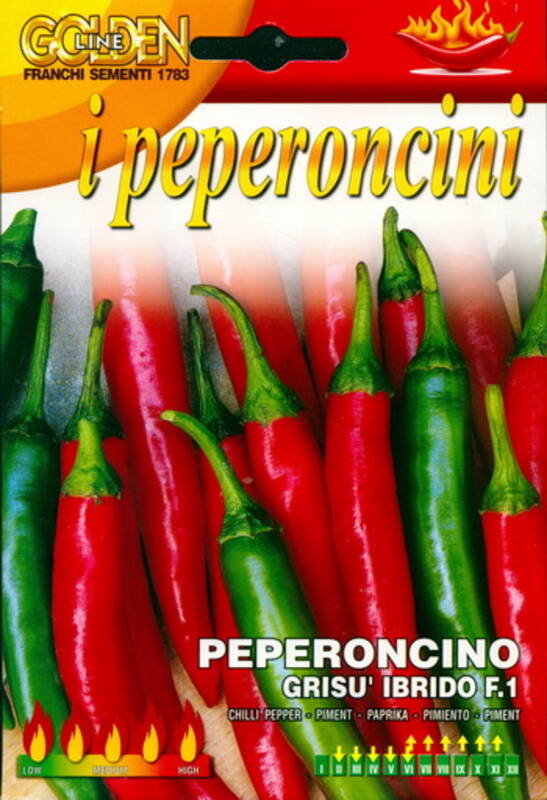
Chili pepper "Grisu" F1.
Spicy seasoning all year round!
Early ripe (100-110 days) hybrid for greenhouses and film shelters. The plant is erect, well-leafy and 80 cm high. The fruits are elongated-prism-shaped, 14 cm long, weighing 70-80 g, bright green in technical ripeness, and red and shiny in biological ripeness. Fruits of strong sharpness, juicy, with a thin wall, pronounced peppery taste and aroma.
The value of the hybrid: resistance to tobacco mosaic virus, stress resistance, abundant and long fruiting. It holds the record for the content of vitamin C. The source of rutin, which is responsible for the strength of the capillaries of the circulatory system. Also contains trace elements: calcium, potassium, sodium, iron, phosphorus, sulfur and chlorine; nitrogenous substances, essential oils and carotene.
It is recommended for fresh and processed consumption, as well as a spicy spice for numerous dishes and sauces. With vegetables, meat and fish, it will add a piquant taste to dishes.
Fruits can be stored without losing marketability and taste for several seasons. One of the best varieties for use in canning is in home cooking and in the production of chilli paprika.
Growing conditions.
Sowing for seedlings: the depth of seed placement is 1 cm. Before emergence, the crops are covered with a film or glass. The optimum temperature for seed germination is +25°C.
Plant out seedlings when the danger of frost has passed. The culture is thermophilic, demanding fertility and soil moisture.
Cannot be planted together with sweet pepper.
Sowing: February (3) - March.
Transfer: May (2.3) - June (1).
Harvest: July-September (1.2).
Spicy seasoning all year round!
Early ripe (100-110 days) hybrid for greenhouses and film shelters. The plant is erect, well-leafy and 80 cm high. The fruits are elongated-prism-shaped, 14 cm long, weighing 70-80 g, bright green in technical ripeness, and red and shiny in biological ripeness. Fruits of strong sharpness, juicy, with a thin wall, pronounced peppery taste and aroma.
The value of the hybrid: resistance to tobacco mosaic virus, stress resistance, abundant and long fruiting. It holds the record for the content of vitamin C. The source of rutin, which is responsible for the strength of the capillaries of the circulatory system. Also contains trace elements: calcium, potassium, sodium, iron, phosphorus, sulfur and chlorine; nitrogenous substances, essential oils and carotene.
It is recommended for fresh and processed consumption, as well as a spicy spice for numerous dishes and sauces. With vegetables, meat and fish, it will add a piquant taste to dishes.
Fruits can be stored without losing marketability and taste for several seasons. One of the best varieties for use in canning is in home cooking and in the production of chilli paprika.
Growing conditions.
Sowing for seedlings: the depth of seed placement is 1 cm. Before emergence, the crops are covered with a film or glass. The optimum temperature for seed germination is +25°C.
Plant out seedlings when the danger of frost has passed. The culture is thermophilic, demanding fertility and soil moisture.
Cannot be planted together with sweet pepper.
Sowing: February (3) - March.
Transfer: May (2.3) - June (1).
Harvest: July-September (1.2).
Fermented Cabbage with Chili Paste.
Healthy, tasty, spicy!
Fermented (pickled) cabbage with hot chili and garlic paste turns out so delicious that you can eat a huge bowl at once. Fermented vegetables contain enzymes that our body needs. Enzymes help digest food and create favorable conditions for the digestive process.
Don't be lazy to spend 15 minutes cooking, wait a week, and it's done!
Characteristics:
Prep time: 7 days (fermentation).
Cooking time: 15 minutes.
Quantity: 2 kg.
Calories (per 100 g): 30 kcal (Protein: 1 g, Carbs: 6 g).
Ingredients:
- 2 kg white cabbage;
- 500 g carrots;
- 50 g chili and garlic paste (or adjika);
- 17 g table salt;
- 2 pods of green hot pepper.

Preparation Method:
1. Prepare cabbage: Remove top leaves, cut out the stalk. Shred the cabbage into narrow thin strips (the thinner, the better).
2. Salting: Place cabbage in a suitable pot (stainless steel, glass, or plastic — do not use aluminum!). Add salt. Massage the cabbage with salt by hand until it becomes soft, releases juice, and decreases in volume by almost half.
3. Add spice: Add the chili and garlic paste. You can use store-bought Asian paste, Georgian raw adjika, or make it yourself (blend chili, garlic, and salt).
4. Green pepper: Remove seeds from the bitter pepper and slice into rings. Add to the cabbage for aroma.
5. Carrot: Wash thoroughly with a brush, peel, and grate (using a Korean carrot grater is great). Mix with the rest of the vegetables.
6. Fermentation: Tamp down the vegetables until covered with juice. Place a plate and a weight (e.g., a jar of water) on top. Cover with a clean towel. Leave at room temperature for 3 days. Mix once a day to release air bubbles.
7. Maturation: After 3 days, transfer to jars and move to a cool place (refrigerator, cellar) for another 4 days.
Tip: Season with cold-pressed olive oil before serving.